Table of Contents
- Direct Answer
- Why Fall Is the Sweet Spot for Deck Installation Before Winter Rains
- How Contra Costa’s Rain Pattern Is Different From What Most Deck Guides Assume
- The Timing Problem Nobody Mentions: Sealant Cure Time vs. the First Storm
- Deck or Fence First? Weather Sensitivity by Project Type
- Where a Fall Build Makes Sense in Contra Costa, and When to Wait
- Fall vs. Winter vs. Spring vs. Summer: Contra Costa Build Windows Compared
- Is building a deck in the fall the same as building it during the rainy season?
- Can you dig fence post holes in Contra Costa clay right after the first fall rain?
- How often do decks in this climate need resealing?
- Why do so many Bay Area decks show water damage by their second winter?
- What affects the cost of deck installation before winter rains?
- What should you ask a contractor before scheduling a fall build?
Direct Answer: In Contra Costa’s Mediterranean climate, the sweet spot for deck installation before winter rains typically runs from late September through early November, when clay soil is still workable, sealants have time to cure, and the county’s rainy season hasn’t yet arrived in full force.
If you’re timing deck installation before winter rains anywhere in Contra Costa County, you’ve probably run into two kinds of advice online. National guides talk about frozen ground and snow delays, neither of which applies here. Local advice tends to stop at “build in fall” without explaining why that window actually works or where it can go wrong.
Homeowners also run into confusing terminology while researching materials. Many people search for “Trex decking” the way they’d search for “Kleenex,” using one brand name to mean any composite decking, even when the product on the table is a different manufacturer entirely. That confusion matters here because composite and wood decking behave very differently once the rain starts.
This guide covers three things: the actual weather and soil window that determines whether deck installation before winter rains is realistic this year, the sealant and soil issues that catch homeowners off guard, and how deck projects differ from fence projects once the rain clock is running.
Why Fall Is the Sweet Spot for Deck Installation Before Winter Rains
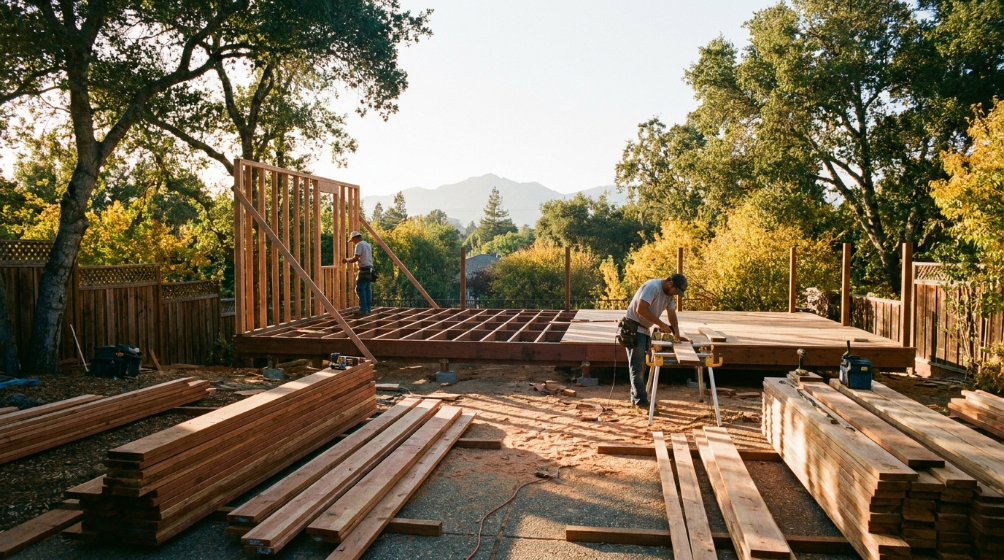
Fall gives you the best combination of conditions for deck installation before winter rains anywhere in the county, from Concord to Danville to Martinez. Temperatures sit in a comfortable range for both crews and materials. The ground has usually dried out from the long, rain-free summer, but an early storm or two can soften the topsoil just enough to make post holes manageable.
Contractor calendars also open up as summer bookings wind down. That doesn’t mean fall is empty. Plenty of other homeowners have the same idea, so getting on a schedule by early September gives your crew the best shot at finishing before the heaviest rain moves in during December and January.
The deadline that matters isn’t a specific date on the calendar. It’s whatever finish work your project still needs, staining, sealing, or curing, measured against how many dry days are left before the rain typically settles in.
How Contra Costa’s Rain Pattern Is Different From What Most Deck Guides Assume
Most deck-building articles you’ll find online assume a climate where the ground freezes solid by December. That’s not Contra Costa. Winters here rarely dip below freezing, and the ground stays workable through most of the rainy season.
What actually limits your build window is water, not cold. Contra Costa’s rainy season generally runs from November through March, with December and January bringing the heaviest storms. Outside of that stretch, the county sees long dry periods, which is part of why timing deck installation before winter rains here comes down to reading the calendar, not the thermometer.
That difference cuts both ways. You get a longer realistic build season than homeowners in colder states. But once the rain does start, it tends to arrive in multi-day systems rather than a single afternoon shower, which stretches recovery time if a storm catches your project mid-stage.
The Timing Problem Nobody Mentions: Sealant Cure Time vs. the First Storm
Here’s the part most homeowners don’t find out until it’s already a problem. Building the frame is rarely what gets rained on. It’s the sealant or stain.
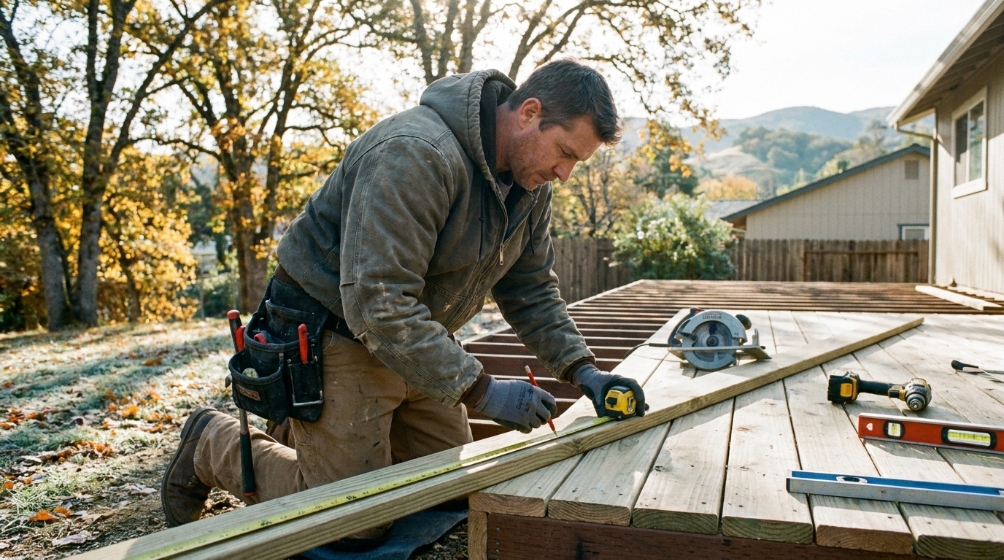
Most wood sealants need somewhere between 24 and 72 hours of dry weather to cure properly, depending on the product and whether it’s oil-based or water-based. If rain hits before that window closes, the clock doesn’t just pause. Moisture gets trapped under a half-cured finish, which can lead to blotching, peeling, or mildew forming where you can’t see it.
The technical cause is straightforward. Sealant needs to penetrate the wood fibers and cure before it’s rain-resistant. Wet wood underneath a freshly applied coat interrupts that process, and Contra Costa’s fall storms rarely give more than a few days of warning. This is exactly the kind of detail that turns deck installation before winter rains from a simple weekend fix into a scheduling problem.
A few ways to protect that window:
- Schedule staining or sealing early in your fall window, not the week before Thanksgiving.
- Ask your contractor which product they’re using and its specific dry-to-rain window, in writing.
- Choose a water-based sealant if your schedule is tight, since most cure faster than oil-based options.
- Watch the extended forecast, not just the next-day forecast, before committing to a sealing date.
Before you commit to a fall install, ask your contractor exactly how many consecutive dry days their chosen sealant needs, and what their plan is if a storm moves that timeline up.

Deck or Fence First? Weather Sensitivity by Project Type
Not every part of your project carries the same weather risk. Weather sensitivity is different depending on the material you choose, and it changes how tight your deck installation before winter rains schedule needs to be.
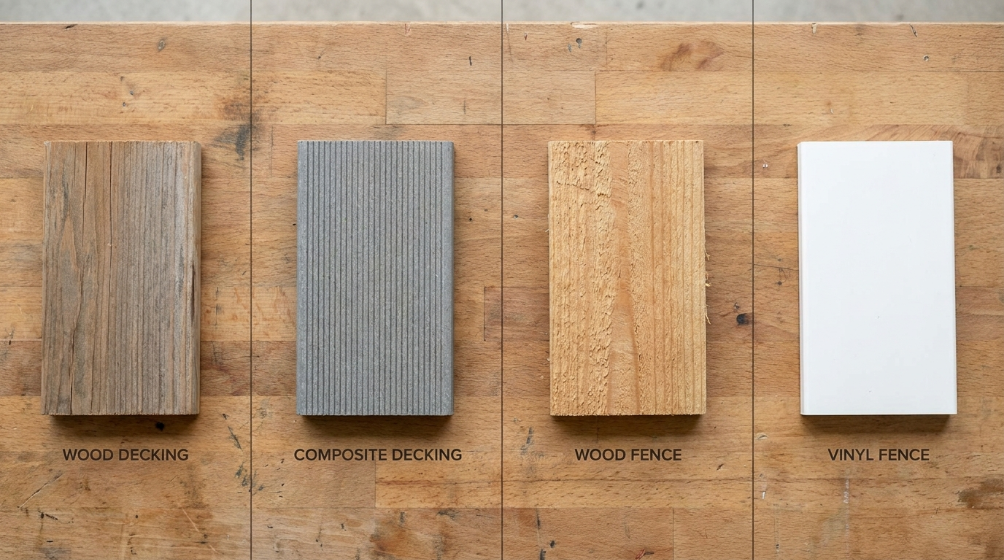
- Pressure-treated wood decking needs to fully dry out before staining. The common mistake is sealing it too soon after delivery, which traps factory moisture under the finish.
- Composite decking (often called “Trex-style” decking regardless of manufacturer) tolerates light rain during installation since it skips the sealing step entirely. The common mistake is assuming the whole structure is maintenance-free, when the wood frame underneath composite boards still needs protection.
- Wood fencing sheds water better than horizontal deck boards because the boards run vertically, but the posts are the weak point. The common mistake is setting posts in clay that’s too saturated to compact firmly around the base.
- Vinyl or metal fencing is largely weather-indifferent once it’s up, but you still need diggable soil to set posts. The common mistake is assuming a fast install means the calendar doesn’t matter.
If you’re doing both, sequencing matters. Fence posts generally need to go in before deck framing that shares a property line, so plan your fall schedule around that order rather than around whichever contractor has an earlier opening.
Where a Fall Build Makes Sense in Contra Costa, and When to Wait
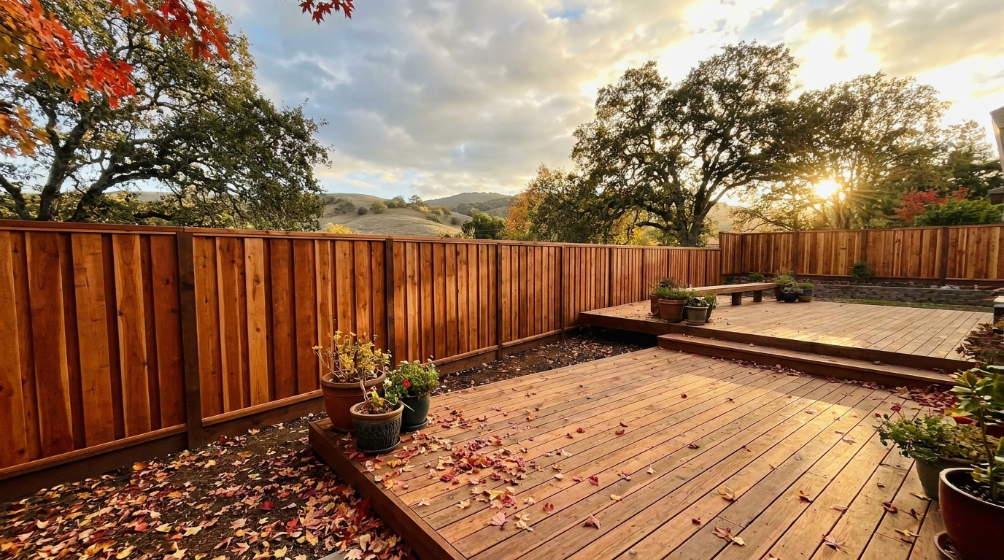
A fall build makes the most sense for homeowners in areas like Walnut Creek, Danville, Concord, and Martinez who want a deck or fence ready before the first dry weekend of spring. It also suits projects where the design and materials are already decided, since fall’s shorter runway leaves less room for mid-project changes.
Permit requirements factor into that runway too. In Contra Costa County, most fences under 7 feet tall and small detached decks under 200 square feet that sit less than 30 inches above grade don’t require a building permit. Larger or attached decks do, and plan review can take a few weeks, which is one more reason to start the process early in the fall rather than late.
It’s a weaker fit if your property sits low near a creek. Parcels close to Walnut Creek or Marsh Creek in Brentwood can hold moisture longer after a fall storm than a lot on higher ground a few streets over, which shrinks the realistic window for deck installation before winter rains on that particular lot.
A fall timeline is probably not the right call if:
- Your deck or fence is one piece of a larger backyard remodel that realistically won’t finish before the rains start.
- Your property has known drainage issues that get worse in the season’s first storms.
- You haven’t finalized your design or confirmed permit requirements and you’re trying to compress that decision-making into a few weeks.
Consider a typical scenario our crews see every fall. A homeowner in Concord calls in early September wanting a new fence before hosting a holiday gathering. Because the posts go in while the clay is still workable and the crew builds in a buffer before the first expected storm, the fence and its finish are both done with dry weeks to spare. Homeowners who wait until late October to make that first call usually end up racing the calendar instead of working with it.
Clients who’ve left feedback on our Google Business Profile and on Yelp often mention how clearly our crews communicate when weather shifts a schedule, which matters more in fall than in any other season.
Fall vs. Winter vs. Spring vs. Summer: Contra Costa Build Windows Compared
Here’s how the four seasons stack up for deck and fence projects in Contra Costa County.
| Season | Rain Risk | Soil Condition | Contractor Availability | Sealant Cure Risk |
|---|---|---|---|---|
| Spring (Mar-May) | Moderate to high, late-season storms | Soft, sometimes still saturated from winter | Tight, peak season begins | Moderate |
| Summer (Jun-Aug) | Very low | Hard and dry, tougher to dig for posts | Most limited, peak demand | Low, but heat can dry finishes too fast |
| Fall (Sep-Nov) | Low, rising toward November | Workable, softened but not saturated | Better, demand eases after summer | Low if scheduled early in the season |
| Winter (Dec-Feb) | High, heaviest Dec-Jan | Can be saturated after storms | Open, off-season | High, narrow dry windows |
No season is perfect. Summer offers the driest stretch but the driest soil too, and winter offers open contractor calendars but the narrowest dry windows for sealant. Fall is the compromise that avoids both extremes, which is the main reason deck installation before winter rains tends to cluster in September and October.
Frequently Asked Questions
Is building a deck in the fall the same as building it during the rainy season?
No. Fall in Contra Costa generally means September through November, before the county’s rainy season typically settles in around late November or December. That distinction is the whole reason deck installation before winter rains works as a strategy here. Waiting until the rain has already started is a different, riskier project than building ahead of it.
Can you dig fence post holes in Contra Costa clay right after the first fall rain?
It depends on how much rain fell and how quickly your specific soil drains. A light early storm often softens clay just enough to make digging easier without saturating it. A heavier storm can leave the ground too wet to compact properly around a post for a day or two afterward, so it’s worth checking soil conditions on site rather than going by the calendar alone.
How often do decks in this climate need resealing?
Most contractors recommend resealing every one to three years, depending on the wood species, how much direct sun the deck gets, and foot traffic. Decks in full sun tend to need it more often than shaded ones. Composite decking doesn’t need sealing at all, which is one reason some homeowners choose it specifically to shorten their fall to-do list.
Why do so many Bay Area decks show water damage by their second winter?
The root cause is usually timing rather than materials. Sealant applied too late in the fall, or applied without enough dry days left to cure, ends up trapping moisture instead of shedding it. Once that moisture is sealed in, it shows up as warping, graying, or soft spots by the following winter, even on decks built with quality lumber.
What affects the cost of deck installation before winter rains?
The main factors are material choice between wood and composite, the size of the deck or fence, whether the soil needs extra prep for drainage or clay conditions, and whether a building permit applies to your specific project. Projects bundled into a larger backyard remodel also carry different scheduling and material factors than a standalone deck or fence.
What should you ask a contractor before scheduling a fall build?
Ask which sealant or stain they plan to use and how many dry days it needs to cure. Ask whether your project falls under Contra Costa’s permit-exempt size limits or will need plan review. Ask how they handle scheduling if a storm moves in mid-project, and ask for their honest read on whether your yard’s soil and drainage make a fall timeline realistic.
Ready to Lock In Your Fall Window?
Timing a deck or fence project around Contra Costa’s weather isn’t about finding one perfect date. It’s about matching the work that’s weather-sensitive, like sealant curing and post-hole digging, to the weeks when conditions actually cooperate.
If you’re weighing deck installation before winter rains against waiting for spring, the honest tradeoff is this: fall gives you a shorter to-do list before the rain arrives, while spring gives you more buffer but a busier contractor calendar and softer, sometimes still-wet soil left over from winter.
Our guide on backyard planning walks through how outdoor spaces come together season by season, and our deck and fence installation services page breaks down the materials we work with most in this climate. If you want to know whether your yard’s soil and drainage make deck installation before winter rains realistic this year, contact our team and we’ll walk the site with you before you commit to a date.