

 Condo Remodeling



 +45


Matching the countertop to how you cook
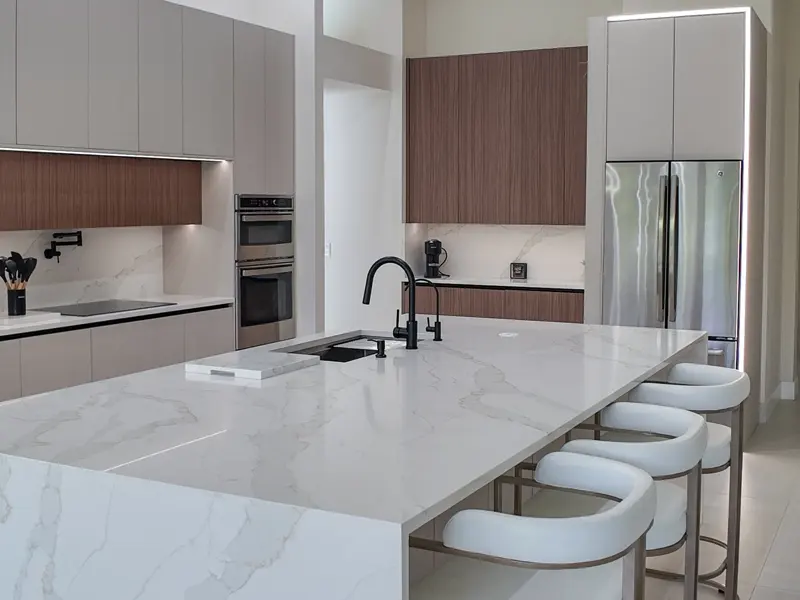
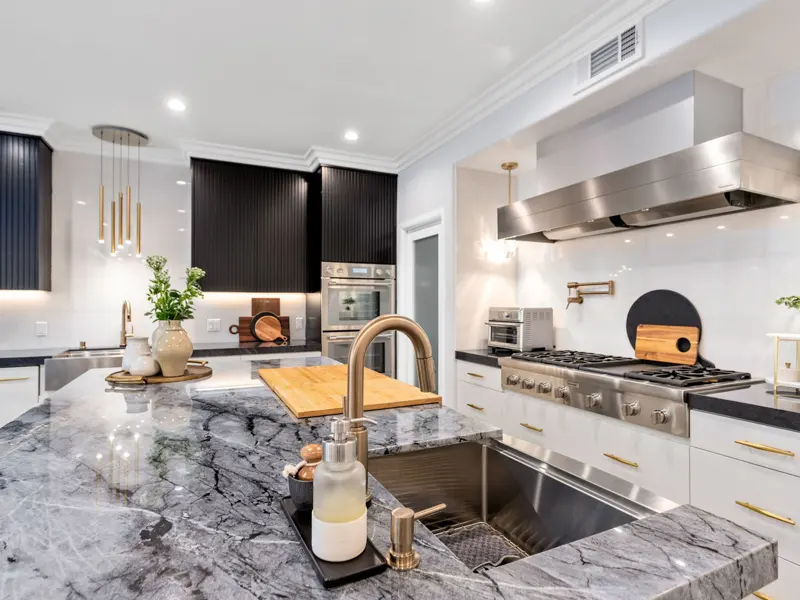
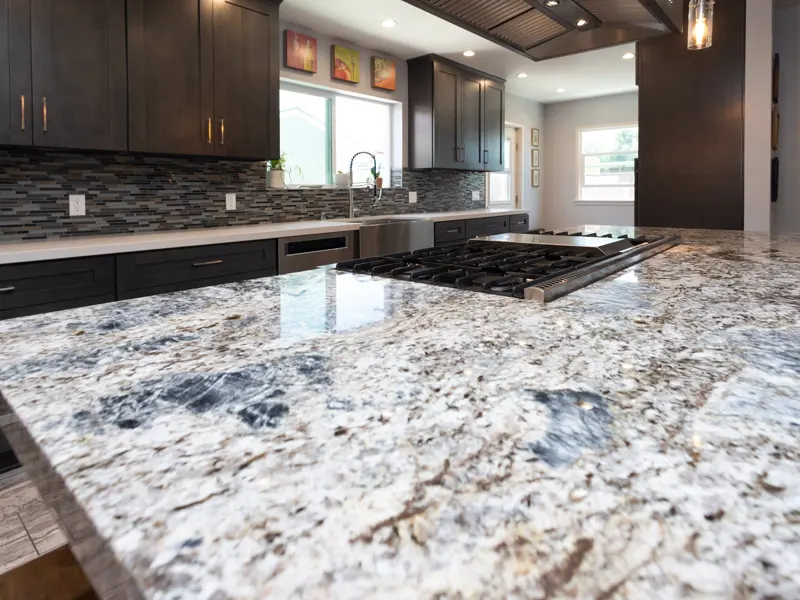
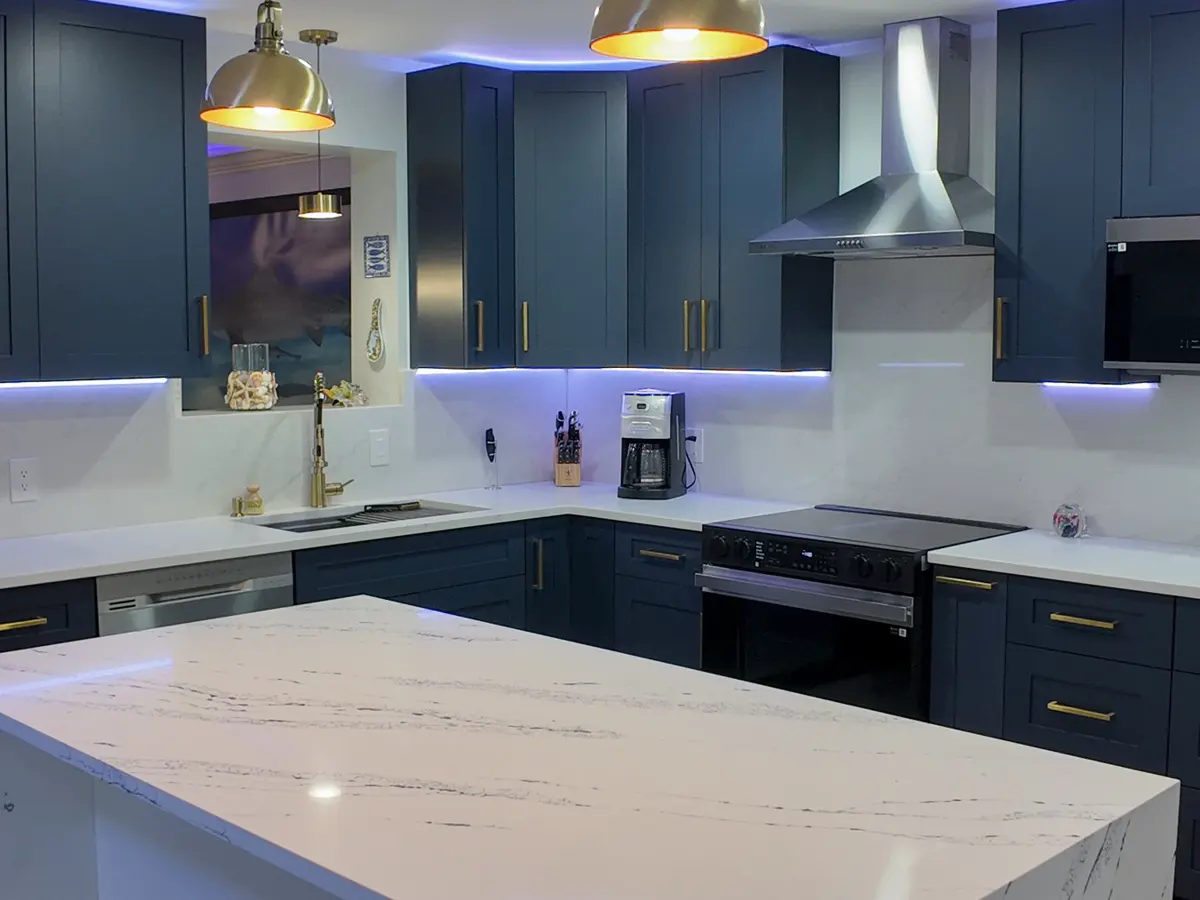
Start with how the kitchen is used. A busy family kitchen with little time for upkeep usually does best with quartz, which needs no sealing. Someone who cooks with hot pans near the range may prefer granite or quartzite, which handle heat well. Bakers often like marble for rolling dough, and a butcher block island adds a warm working surface.
Many kitchens mix materials: a durable stone on the perimeter and a different stone or wood on the island. At the visit we look at your cabinets, your light and your habits, and narrow the six materials down to the two or three that make sense.
Quartzite vs quartz: how to tell them apart
The names are similar but the materials are not. Quartzite is a natural stone cut from a quarry, with veining that varies slab to slab; quartz is engineered from crushed quartz bound with resin, so its color is consistent. Quartzite needs sealing and is very hard; quartz needs no sealing but should not take a hot pan directly.
Some stones sold as quartzite are softer marbles, so ask for the stone name and look at the actual slab before you commit. Because each quartzite slab is unique, the seams and the veining on a large island are planned on the slab itself, which is one reason it costs more than quartz.
- Quartz, granite, quartzite, marble, porcelain and butcher block
- Templated, cut and installed by a partner stone fabricator
- About 1 to 2 weeks from template to installation
- Installed in one day, old countertop removed
- Countertops alone or as part of a kitchen remodel
- California license CSLB #1130522
Is marble a good kitchen countertop?
Marble is beautiful and stays cool, which bakers love, but it is softer and more porous than granite or quartzite. Lemon juice, wine and vinegar can etch the polished surface, and it needs sealing. A honed finish hides etching better than a polished one.
Homeowners who accept that marble will develop a patina over time are usually happy with it. If you want the look with less care, a marble-look quartz or porcelain gives similar veining with far less maintenance. We show you both side by side.
Seams, overhangs and support
Long runs and large islands often need a seam, because slabs come in limited sizes. A good layout places seams away from the sink and the cooktop and lines up the veining across them. Your fabricator shows you where the seams will fall before the slab is cut.
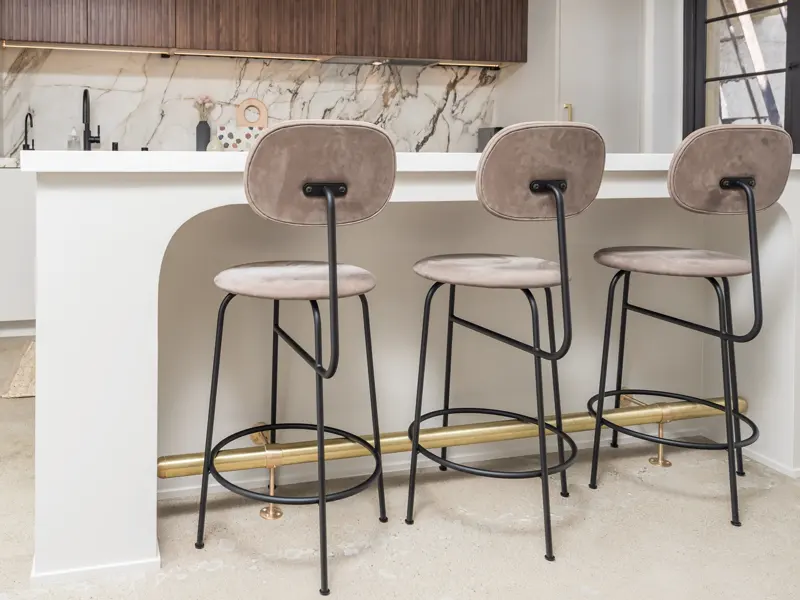
Seating overhangs need support. Larger overhangs call for brackets or corbels under the counter, and the safe limit depends on the material and its thickness. Stone is heavy, so the cabinets underneath must be level and solid before installation; we check them at the first visit.
Engineered stone and fabrication safety in California
Cutting stone, and especially engineered stone such as quartz, releases fine crystalline silica dust. California's workplace rule for silica, Title 8, section 5204 (opens in a new tab) of the state regulations, includes specific requirements for shops that cut and finish artificial stone.
That is one reason countertops are templated in your kitchen but cut and finished in a fabrication shop, not on site. Only small adjustments are made during installation. If you are comparing countertop companies, it is fair to ask how their fabricator handles dust control.
Everyday care by material
Quartz needs only mild soap and water; avoid harsh cleaners and put trivets under hot pans. Granite and quartzite need a sealer from time to time, depending on the stone, and a quick water test tells you when: if water darkens the surface, it is time to reseal. Marble needs sealing and quick cleanup of acidic spills.
Porcelain resists heat and stains but its edges can chip under a hard knock. Butcher block needs regular oiling and should be kept dry around the sink. Ask us at the visit, and see our cabinet refacing page if new counters are going on existing cabinets.