 Condo Remodeling



 +45


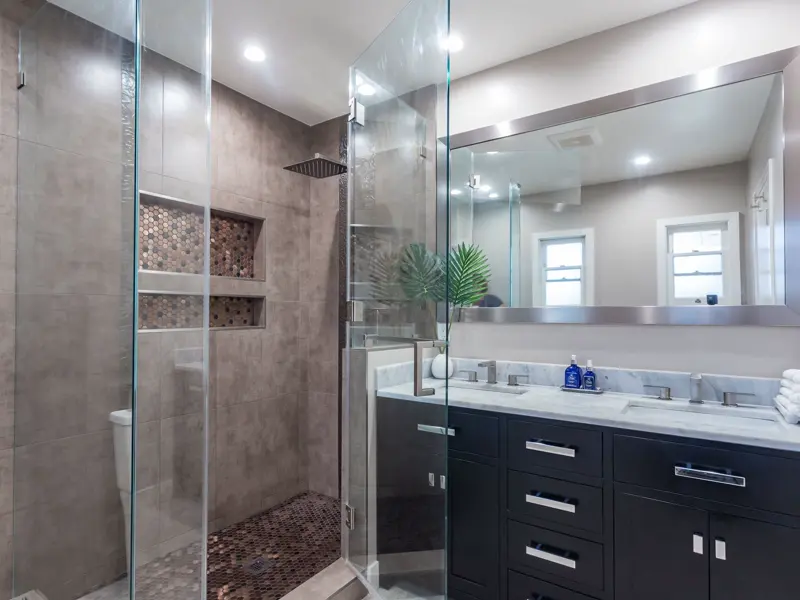
Measuring for a new vanity
Start with the width of the wall or the alcove, then check the depth: a standard vanity is about 21 inches deep, while a compact one can be closer to 18, which helps in a narrow bathroom. Leave room for the door to swing, the toilet to be used comfortably and drawers to open fully without hitting the tub or the wall.
Note where the drain and the water supply come out of the wall or the floor. A new vanity that fits those positions is the quickest and most affordable swap; one that needs them moved turns the job into plumbing work. We measure all of this at the free visit before you buy anything.
Single or double vanity?
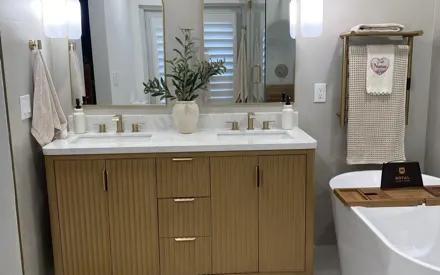
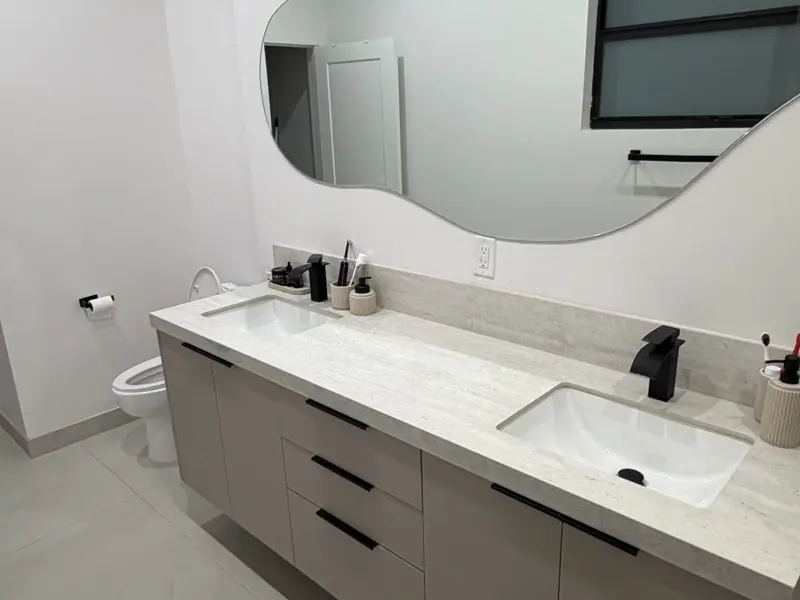
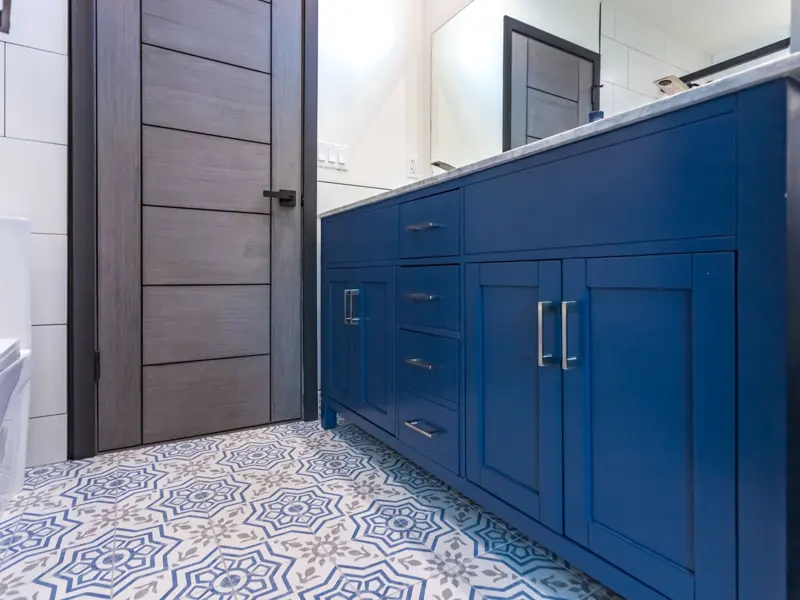
A double vanity gives two people their own sink and storage, which matters in a busy primary bathroom. It usually needs a width of about 60 inches or more to leave each person enough counter space. In smaller rooms, a single sink on a wider vanity often works better than two cramped ones, and it keeps more counter area free.
Converting a single vanity to a double means adding a second drain and supply lines inside the wall. That is real plumbing work and, depending on your city, it may need a permit; we price it separately so you can decide whether the second sink is worth it.
- Single, double, floating, vessel, console and custom vanities
- We supply the vanity, or install one you bought
- Same-spot swaps installed in 1 day; floating vanities in 1 to 2 days
- Custom vanities built by a partner cabinet shop in 4 to 8 weeks
- Old vanity removed; water and drain reconnected
- California license CSLB #1130522
What a floating vanity needs
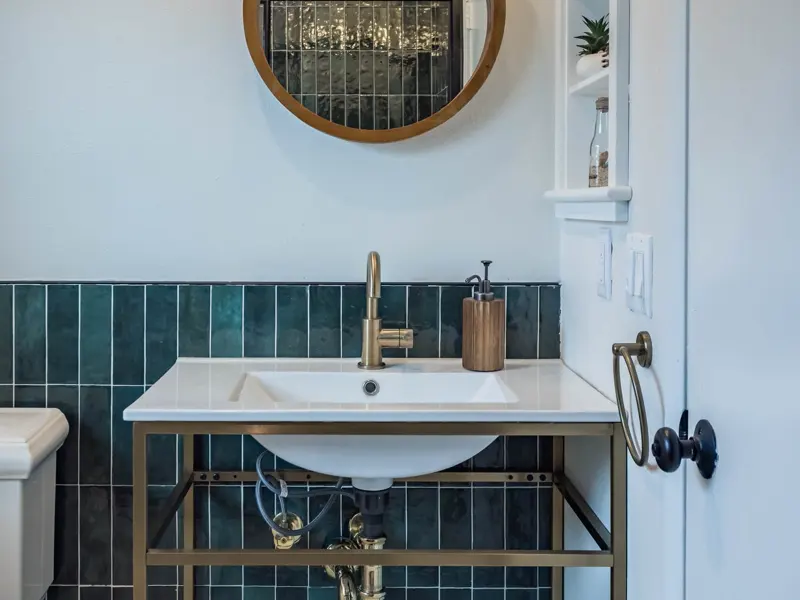
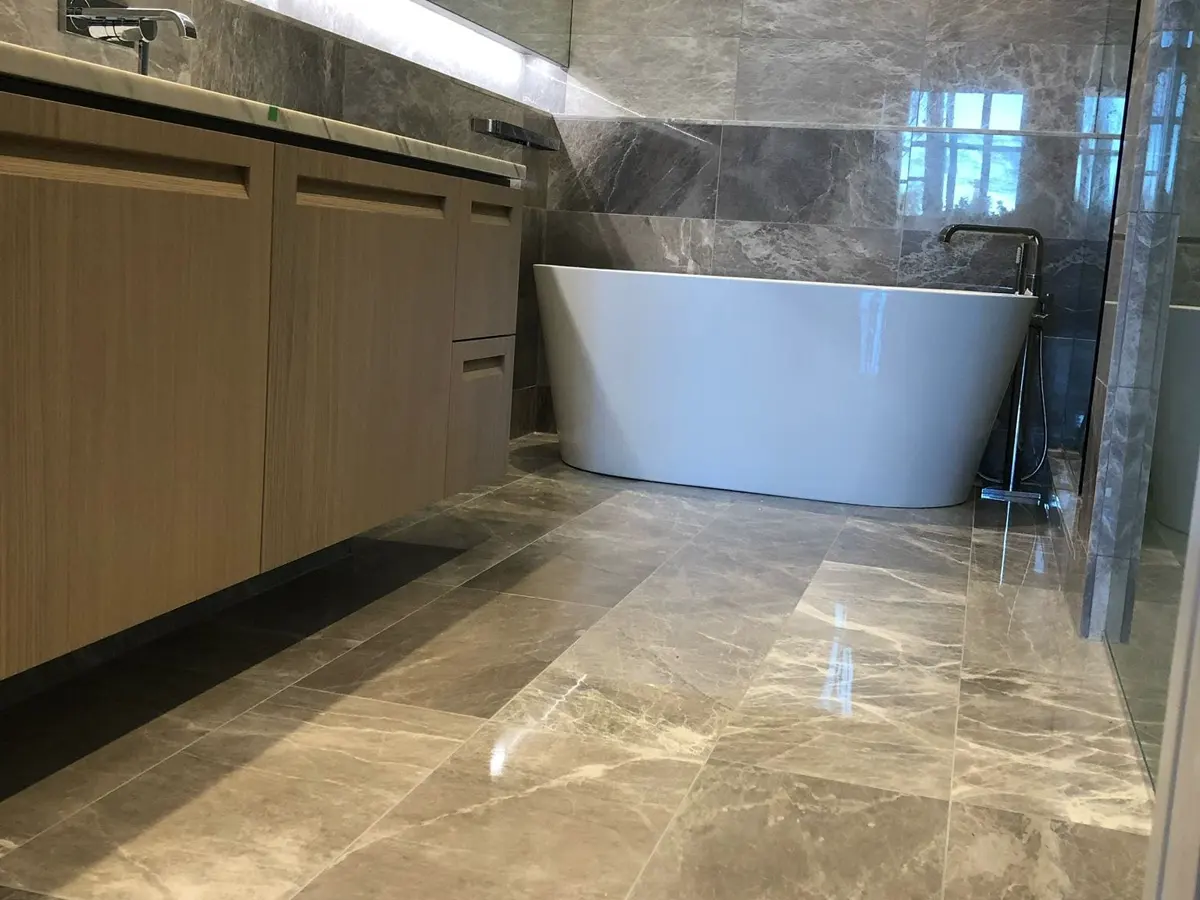
A floating vanity hangs on the wall with open floor underneath, which makes a small bathroom feel larger and is easier to clean under. Because the full weight of the cabinet, the top and the sink hangs on the wall, it needs solid backing: wood blocking between the studs, added before the wall is closed or by opening the drywall.
The drain and supply lines also have to sit higher and be hidden inside the cabinet, since nothing covers them below. That extra wall work is why a floating vanity usually takes 1 to 2 days instead of one, and it is worth planning at the start.
Choosing the vanity top and sink
Quartz is the most common vanity top today: it does not need sealing and resists the makeup, toothpaste and hair products that stain natural stone. Marble looks classic but can etch; granite is durable and hides spots. Many vanities come with a matching top, while custom vanities get a top cut to size.
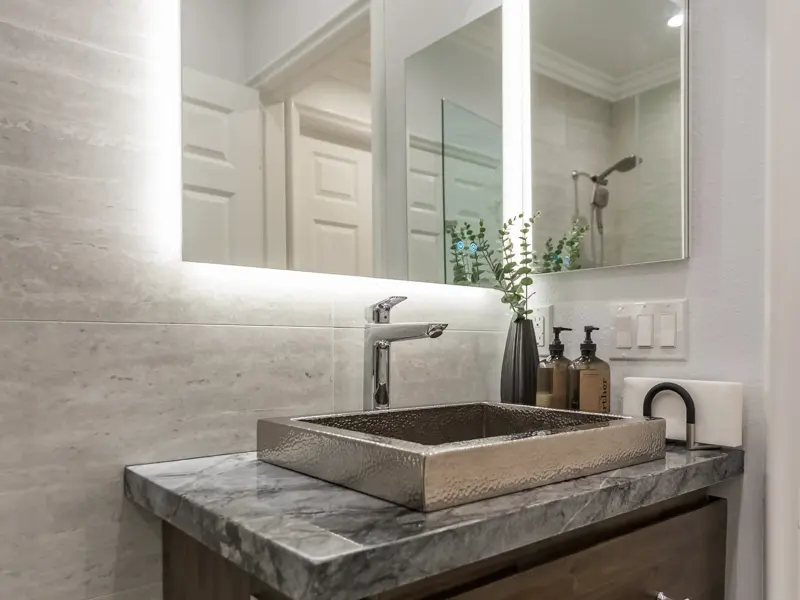
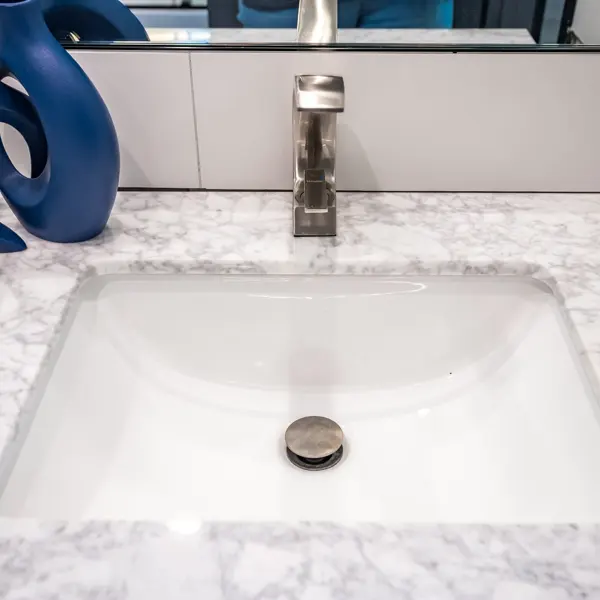
An undermount sink sits under the top for an easy-to-wipe edge; a vessel sink sits on top as a design feature and needs a taller faucet or a wall-mounted one; an integrated sink is molded into the top with no seam. The faucet holes must match the faucet you choose, so we confirm both before the top is ordered.
What we check behind the old vanity
Removing an old vanity often shows what years of small leaks did: a soft or stained floor, swollen particleboard or corroded shutoff valves. We check the valves, the supply lines and the drain trap, and replace worn parts so the new vanity is not connected to old problems.
In older Bay Area homes, the flooring may not run under the old cabinet, and the wall behind it may be unpainted or still have old tile. We look at the gap the new vanity will leave and plan the patch, the paint or a backsplash so the finished wall looks clean.
Vanity installation across the Bay Area
We install bathroom vanities from Brentwood, Antioch and Concord to Walnut Creek, Oakland and San Jose, as a single job or as part of a full bathroom remodel. Whether a like-for-like swap needs a permit depends on your city, and moving plumbing usually does; we check with your building department and file it when required.
Wherever you are, the visit is free, the estimate lists the vanity, the top, the faucet and the installation separately, and our own crew does the work. Ask for your vanity estimate.