






Call now Free estimate

How to hire a licensed remodeling contractor in California.

The checks, contract terms and payment rules that protect you before you sign, based on guidance from the Contractors State License Board.

Thank you.We received your request and will contact you shortly.
  • 4.9 on GoogleFrom 60 homeowner reviewsRead reviews ›
  • 5.0 on Thumbtack49 reviews · Top Pro 2022 to 2024Read reviews ›
  • Licensed and insuredCalifornia CSLB #1130522
  • Permits handledWe file them with your city

Quick answer

What to do before you hire a contractor

Reviewed by Maurelio, owner of Partners Remodeling (CSLB #1130522). Last reviewed

To hire a remodeling contractor in California, look up the license on the CSLB website, get several written estimates for the same scope, call recent clients and sign a written contract before work starts. For home improvement, the down payment cannot exceed $1,000 or 10 percent of the price, whichever is less, and later payments should follow finished work. Anyone doing a job of $1,000 or more, or any job that needs a permit, must be licensed.

License needed
$1,000 and up
Written contract
Over $500
Most down payment
$1,000 or 10%
Time to cancel
3 business days*

Step one

How to do a California contractor license lookup

It is free and takes two minutes. Enter the license number or business name in the CSLB Check a License tool (opens in a new tab), then read these five lines.

What to read in a CSLB license record
LineWhat you wantIf not
StatusActive, with no suspensionAn expired or suspended license means stop
ClassificationFits your projectA specialty license may not cover a multi-trade remodel
Business nameMatches the estimateA different name can mean a borrowed license
BondA bond is listedA missing bond is a reason to ask why
ComplaintsNo public legal actionsRead the details before you decide

You can check ours too: see license #1130522 and our credentials.

Before you sign

What a home improvement contract must spell out

California requires a written contract for home improvement over $500. The CSLB publishes a consumer guide to these contracts (opens in a new tab).

Key items in a California home improvement contract
ItemWhat to look for
Price and payment scheduleThe total, plus each payment tied to finished work
Description of the workMaterials, brands and what is not included
Start and finish datesWhen work starts and when it should be substantially done
Change ordersAny change in price or scope must be in writing, before the work
Permits and cleanupWho pulls permits and who removes debris
Right to cancelThe notice of cancellation that the law requires

*You generally have three business days to cancel, and a longer period applies if you are 65 or older. Some contracts have exceptions, so read the notice in yours. This page is general information, not legal advice.

The interview

Six questions for the contractor interview

Good contractors answer these without hesitation. Vague answers tell you as much as the answers themselves.

1Who runs my job day to day?Get a name, and ask how often that person will be on site.
2Who does the work?Ask which trades are in-house and which are subcontracted.
3Can I call recent clients?Ask for jobs like yours, finished in the last year or two.
4What is not in this price?Allowances, permits, design and appliances are common gaps.
5How do you handle surprises?Ask how hidden problems are priced and approved.
6How will we communicate?Agree on who updates you, how, and how often.

Step by step

Hiring a contractor in six steps

A careful search takes two or three weeks. The state board has more on hiring a contractor (opens in a new tab), and our cost guide helps with the budget.

Two-tone kitchen with a waterfall quartz island The Partners Remodeling team
  1. Define the scope

    Before you call

    Write down what you want and set a rough budget.

  2. Build a short list

    Week 1

    Ask neighbors and friends, then read recent reviews on more than one site.

  3. Check each license

    Same day

    Look up every name on the state board website before you meet.

  4. Compare written estimates

    Weeks 2 to 3

    Ask each contractor to price the same work, line by line.

  5. Call references

    Before deciding

    Ask about schedule, communication and how problems were handled.

  6. Sign, then pay by progress

    Start of work

    Sign the contract first, and pay only for work that is finished.

From our clients

What this advice looks like on real jobs

Two public reviews that show why the conversation matters as much as the craft. See more in our client reviews.

Hidden problem, shower remodel

A crack that went deeper

F Foster called about a cracked shower floor pan before selling the house. The job also revealed foundation issues the owner did not know about, and those were repaired too.

“They repaired foundation issues we did not know about.” F Foster, Google review

Unplanned change, flooring job

A wall nobody had painted

While installing vinyl in a new home, the crew pulled the baseboard and saw the builder had not painted down to the floor. Putting the old boards back would have shown it, so the whole baseboard was changed.

The client also noted receipts for every payment and photo updates while away. Marjorie F., Thumbtack review

Ask any contractor you interview how they handled a surprise like these. For your own project, put the answer in writing with a change order.

FAQ

Hiring questions, answered

Licenses, deposits, contracts and permits. For how we work, see our FAQ page.

Use the free CSLB Check a License tool (opens in a new tab). Enter the license number or business name, then confirm that the status is active and the classification fits your project.

No. California caps the deposit on home improvement at $1,000 or 10 percent of the price, and the lower figure applies. From then on, pay only for finished stages.

Whenever a job totals $1,000 or more, or needs a permit. The limit rose from $500 in 2025, and a larger job cannot be split into smaller pieces to stay under it. See the CSLB notice (opens in a new tab).

Check the license first, compare at least three written estimates for the same scope, call recent clients, and pick the one whose communication and detail you trust. The lowest bid is not always the best value.

Three is a common rule of thumb. What matters more is that each one prices the same scope, so that you can compare line by line.

No. Home improvement work over $500 in labor and materials needs a written contract, signed before work starts. Changes should also be in writing.

Generally yes, within three business days of signing, and homeowners 65 or older get longer. The contract must include a notice explaining how. Exceptions exist, so read yours.

Your contractor should. Be careful if you are asked to pull them as the owner, because that can make you responsible for the work. Ask to see the permit before the job starts.

Cash only, a large deposit, pressure to sign today, no written contract and no license number. Our red flags list has more.

Hiring guide

Choosing a contractor you can work with for months

Beyond the license: how to read an estimate, what the contract should prevent and how to protect your payments.

Which kind of contractor do you need?

California licenses contractors by classification. A single-trade job, such as electrical or roofing, usually goes to a specialty contractor. A remodel that touches several trades calls for a contractor licensed to take on that combination of work.

The license record lists the classification. If you are not sure it fits your project, ask the contractor directly, or call the state board before you sign.

How to read an estimate

A useful estimate breaks the job down by area or trade and names materials. A single total with no detail cannot be compared with anything, and it leaves room for argument later.

Watch the allowances. A low allowance for tile or cabinets makes the total look good, but you pay the difference when you pick what you actually want. An unusually low bid often means something was left out.

California hiring rules at a glance
  • Jobs of $1,000 or more, or needing a permit, require a license
  • Home improvement over $500 needs a written contract
  • Down payment limited to $1,000 or 10 percent, whichever is less
  • Generally three business days to cancel; longer at 65 or older
  • Check any license for free on the CSLB website
  • Partners Remodeling: California license CSLB #1130522

Protecting your payments

Tie each payment to a stage you can see: demolition done, rough plumbing passed, cabinets installed. Do not pay ahead of the work, even for materials, and avoid cash.

Keep a job file with the contract, change orders, receipts and photos. If a subcontractor or supplier goes unpaid, a lien can land on your home, so ask for lien releases as you pay.

Change orders and surprises

Almost every remodel changes along the way. A change order is a short written agreement that states the new work, the price and the effect on the schedule, signed before that work begins.

Decide up front how hidden problems will be handled, and keep a cushion in the budget. Our cost guide explains how much to set aside.

Why communication matters as much as craft

You will deal with this company for weeks or months, in your own home. Notice how fast they answer, whether they listen and whether the estimate reflects what you said.

Before work starts, agree on working hours, parking, bathroom use, dust protection and who to call when something is wrong.

If something goes wrong

Start with a clear written note to the contractor describing the problem and what you expect. Most issues get solved at this stage, especially when your contract and job file are in order.

If they do not, the Contractors State License Board takes complaints about licensed contractors. See the license details page for how to reach the board.
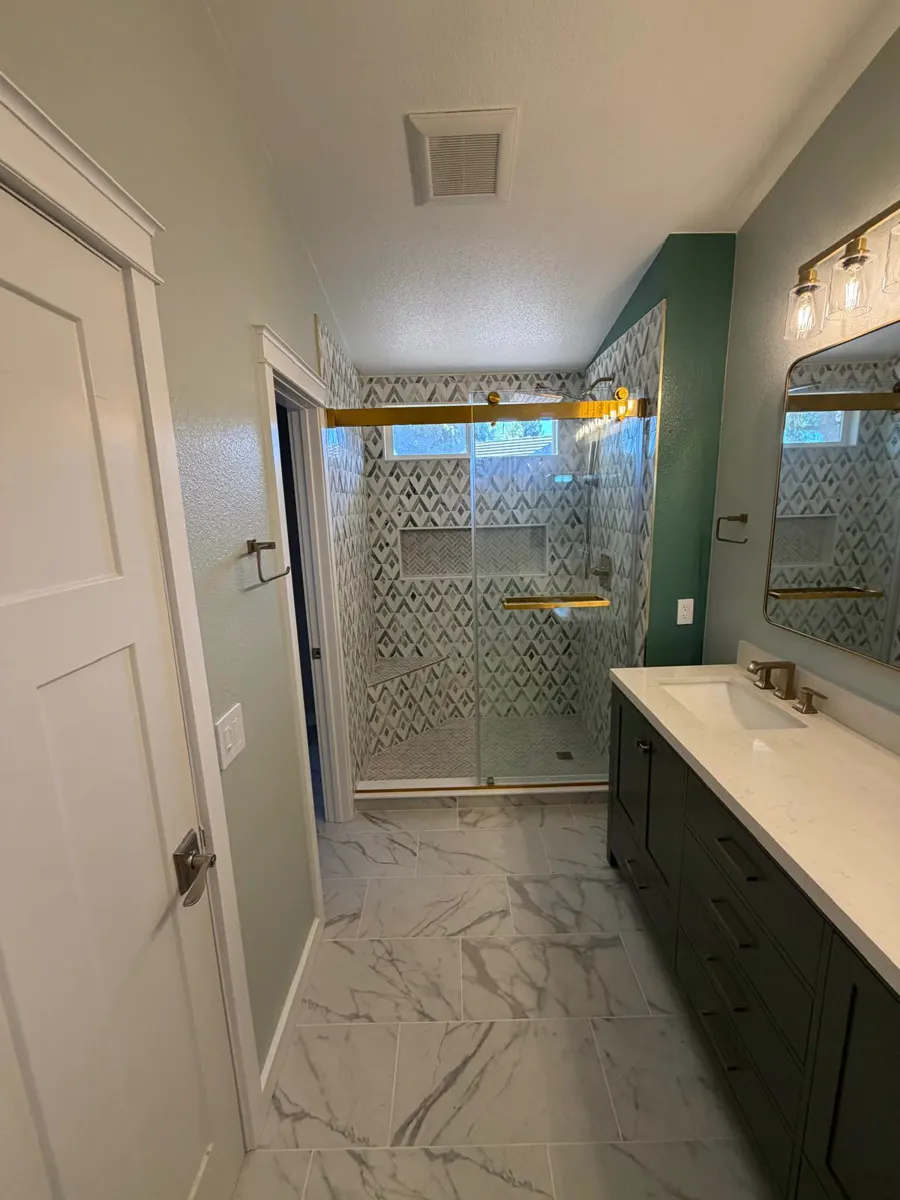
Finished white kitchen with a quartz island

Ready to compare

Put us on your short list

Check our license, read our reviews, then book a free visit. You will get a written, itemized estimate to compare with the others.